
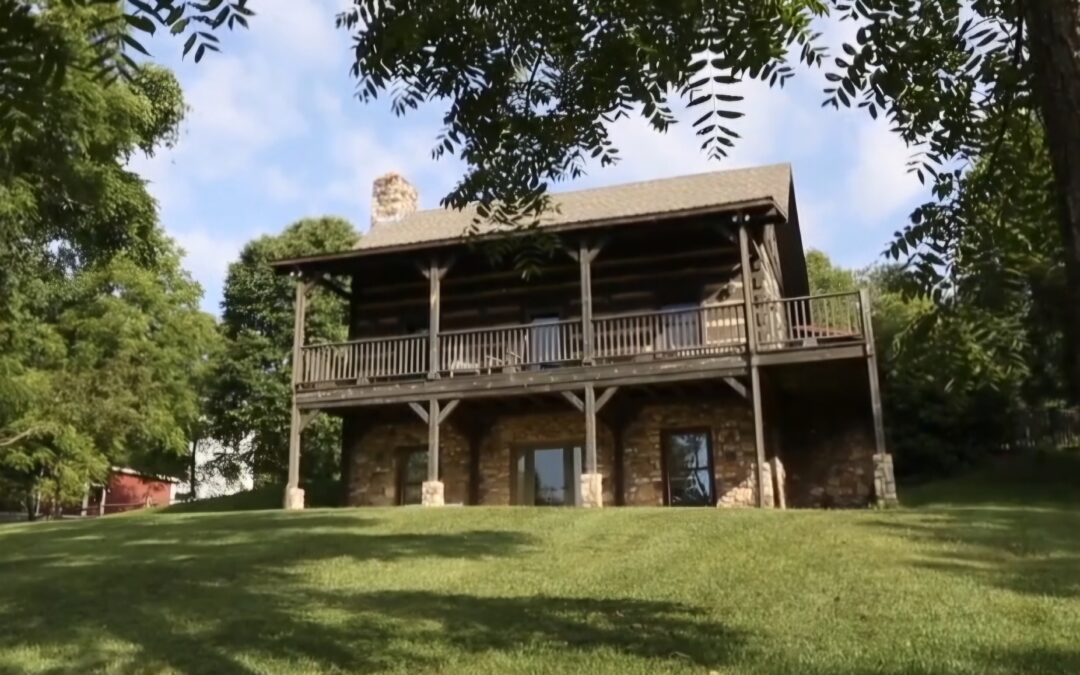
This year’s Highland Summer Conference in Radford, Virginia, was another stunning adventure! Held July 20-24, and organized by April Asbury, it met all my expectations of the prior years and went further.
This year’s workshop leader was poet Marianne Worthington, with whom
I’m familiar because she is also a regular Appalachian Writers Workshop attendee at Hindman. Our classes were held in The Barn this year, instead of the Selu Conservancy. Our numbers have grown enough in three years to necessitate the move.
On Monday, Marianne had us start off with a sort of “Where I’m From” template to introduce ourselves to each other and tell a little about ourselves in the process. Because she knew me, she put me on the hotseat and made me go first. I hadn’t finished writing out my answers, so I winged part of it. I sat at a table each day with LS, Angel, Matt P., and Sharon Waters. (Sharon and I roomed together at a Comfort Inn & Suites just down the road for an amazing rate!) Then we moved into some form poetry, starting with “erasure” poems. I got a page from Ann Pancake’s Strange As This Weather Has Been, which is one of my favorite books I’ve read in the past several years. The title poem in my forthcoming collection from Finishing Line Press, Knowing How to Lose, has an epigraph from Strange As This Weather Has Been at the beginning of it. In an erasure poem, you take words or phrases you want to keep to make a poem from a page of script and erase or block out the rest of the words. You can create words that aren’t present by taking letters from words (an “a,” for example, or a “t,” an “h,” and an “e,” from separate words if you need to). And you have to take the words for your poem in sequence as they appear in the original text. I came up with a ten-line poem that Marianne thought was pretty good, and that reflected well the themes of the original text.
On Tuesday, we tackled prose-poetry. Which I admittedly do not always get. I’m not sure what the difference is between “prose-poetry” and “flash,” if I’m going to be flat-out honest about it. And I’ve had some of the best try to educate me on this topic. But it has not taken hold. We learned about the history of it. We learned about some of the techniques used in it. And, I’m sorry. It still seems to me that it could be a piece of flash fiction or nonfiction that is poetic. So maybe I’m destined to never “get” it. I’ll keep trying, though… Then we learned about the haibun, which is basically a prose-poem with a haiku at the end. Although the haiku doesn’t have to be the “traditional” 5-7-5 syllabic pattern. It should achieve a moment of enlightenment; it is often keyed to nature/the seasons; it should complement the prose-poem without repeating what is in it; it should create resonance; and it should be able to stand on its own, independent of the prose-poem. My haibun attempt was about the first day of kindergarten. Someone in the class said they were writing all memories, and Marianne said, “All we have is memory.” After lunch, we moved on to talk about “idiolect.” That’s when Marianne used the phrase “unlettered,” to stand in for instances when others might use “uneducated.” I believe she told us Mr. James Still used the phrase “unlettered.” I like that. It’s more suitable that uneducated, on many levels. Idiolect, broken down, means: idio = “own, personal, private, peculiar, separate, and distinct;” lect = “social variety of a language.” My idea to write for that one was my Granddaddy Vance, as there were certain phrases he used and words he said in certain ways that weren’t dictionary pronunciations.
Wednesday, we started out talking about “place.” We wrote out a list of place names, which is something I enjoy doing, and I might come back to that list at some point and use several of them in one poem, because several of them are along the road from where my grandparents lived when I was a little girl to where my great-grandparents lived. I never thought about how many place names there were in that small span of space. Less than five miles. The place I wrote about, though, is one I often write about when thinking about my young childhood: Granny Vance’s kitchen. The poem was called, “Prediction.” I also tried one about the house Russ and I live in, but it didn’t turn out so well. After lunch, we wrote our own “Where I’m From” poems, based on George Ella Lyon’s form. I love George Ella and have written after this form several times in my lifetime. (There’s a version of it in my poetry chapbook, too.) I tried two different ones, but I didn’t really finish either one.
Thursday’s poems were “Poems That Talk Back.” Forms for “talking back” include: epigraphs; honor another poet’s work by writing an “after” poem; write a letter (“epistolary poem”); collaborate with other poets in the writing; ekphrasis; epideictic praise or blame another poet or their poem (through an obituary, eulogy, elegy, or ode). We took a look that day at Golden Shovels, Centos, Glossas, and Contrapuntals. In a Golden Shovel, the end words form a line from another poem. Centos are made up of lines from other poems to create an entirely new poem. Using ONLY those lines, no additional words. Glossas, I’m fuzzy on. My notes say that they have ten lines with ten syllables per line, and that there are four stanzas — the 6th, 9th, and 10th lines rhyme. And something about a borrowed quatrain that could be song lyrics??? (We didn’t get too far on that form.) Contrapuntals are just freaking difficult. You have a poem down one side of the page. And a poem down the other side of the page. The two poems are in contrast of each other. Here’s the kicker… The poems can be read ACROSS the page as a totally different poem. Often there is one line centered that is shared by the two poems. Like I said — freaking difficult! We also talked about Catalog Poems, although I didn’t write down a definition. I wrote two examples, though. It looks like they’re sorts of list poems. And the way I approached it was “Acceptable Acts of Punishment” in my life. I also have a “Medical History Poem” about nine stitches in my knee. And we had more prompts to take home because we ran out of time. As is so often the case in a great class like that.
Marianne left Thursday after class because she was due at Hindman on Saturday for a pre-workshop workshop. So was I, so I skipped out on Friday morning, but we had more great prompts from Marianne. I just need to find time to work on all the prompts and to key in all the work from class to my laptop.
It was great seeing so many returning friends and to meet some new friends, too. I don’t know who the speaker will be next year, but I’m already looking forward to being there!
Recent Comments